
Building Learning Progressions

If you teach a variety of students, you've probably had students that aren't right on grade level. They might be above the skills you are teaching or missing a key few skills that make grade level content very challenging. Many of us only have experience in the grade levels we have taught that might make teaching these particular students a bit more complex.
That's why it's imperative teachers understand the full vertical development of learning math concepts.
I know...teachers are already stretched thin, especially elementary teachers who plan multiple subjects. But there's something special about exploring a learning progression that shows the steps in developing a concept. It's one of those tasks that pays off big time when time is invested in helping teachers understand the vertical planning of a subject area.
What are Learning Progressions?
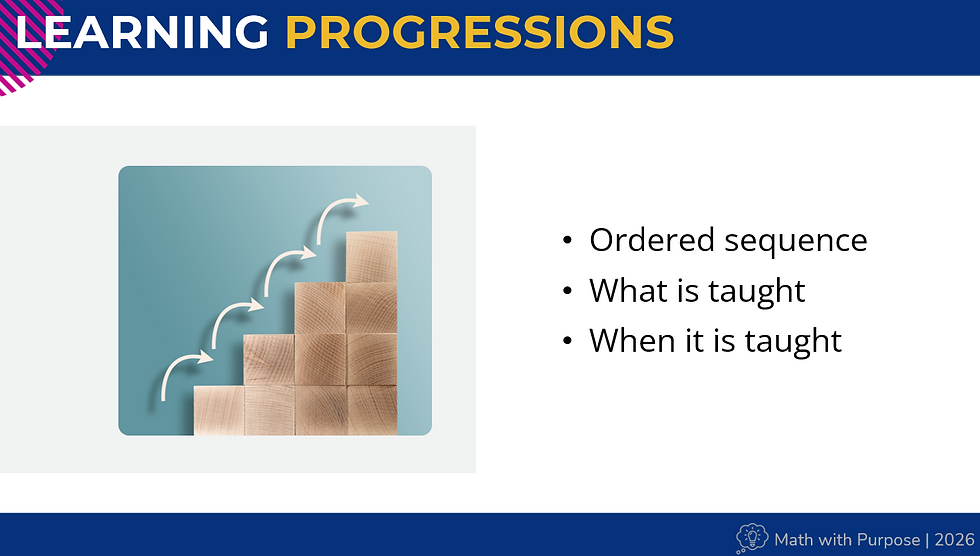
Think of learning progressions as the checkpoints along the way for students to master a concept. These are often the grade level expectations and they build in each grade level. They can be state-mandated standards or even the Scope and Sequence in your textbook.
Most teachers spend time getting to know their own learning progressions in their grade level. Unfortunately, there's not time given to explore the standards that build into their grade level or how their grade level expands into the next. This is where that vertical planning can be really helpful.
Developing a Learning Progression
One of my favorite live PD sessions is to spend a day helping teachers use their time wisely with vertical planning. I actually presented on this in a quick 1-hour mini session at the National Symposium for Classical Education in 2026 and had people asking how they can repeat this process in their building. While I love to come to your school and help, I recognize that this may not always be possible. So, I'm sharing my strategies with you.
Follow these steps to model this process. Be sure to check out the video below where I walk through this process and even snag your free checklist download.
Make some planning time where your staff can vertical plan. This will take a bit of time. I like to do it in a few hours, but I also know that may not be possible. I've dedicated an hour with each grade level while we completed this project over a few months. Definitely not ideal, but I take what I can get.
Ensure you have space to hang it up. One of the best ways to use this information is to reflect on the process. You want a big space where you can hang up the learning progressions for your entire staff to study.
Print your standards or scope and sequence for the grade levels you are mapping single-sided. This will be important, because you will have teachers cutting them apart and placing them in order. You can begin with one topic from the standards such as Geometry, Number Sense or Fractions. Over time, you will want to complete it all. However, just choose one to begin. (I highly discourage you from doing this digitally. There's something about having the ability to manipulate the standards physically that helps to truly order these in a process that makes sense.)
Break into groups. Assign specific standards to each group so you are tackling this project together and not replicating more work. You can have teachers work on their grade level or mix the groups up so they can discuss.
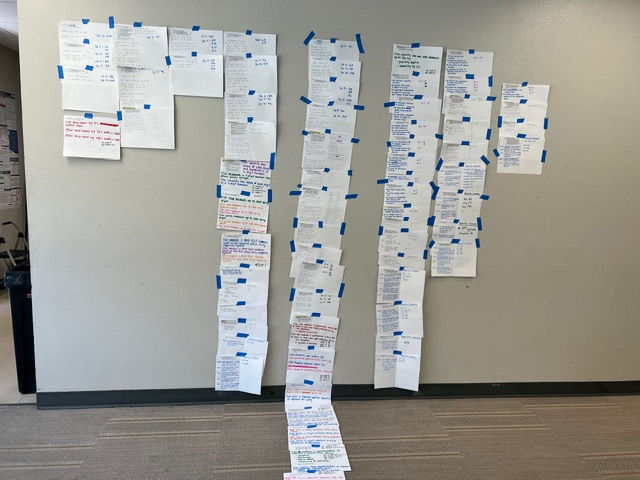
Invite teachers to order the standards in the way they progress. What skills come first? What skill would go next? They should build columns of each skill using their standards. Encourage them to discuss and talk about how these should go. Keep in mind that there isn't necessarily a right or wrong order. It's more about the conversation and helping everyone to understand how the skills progress. Tape them to a blank piece of paper in order.
Encourage the groups to begin combining their standards. Build long columns of each and invite teachers to discuss why they feel they go in that order. Move things around until most people feel comfortable with the order.
Sit back and reflect. What grade levels have the most standards for this skill? How do the other grade levels support that skills?
Take a moment to watch this video where I actually walk through this process. I spend a few minutes talking about the difference between learning progressions and learning trajectories and then dive into this process.
Begin Planning Your Learning Progressions Now
This is a great activity to do for end-of-the-year PD or even during back-to-school. If you want a guide to help you get this started, please check out the free download below.

You Have a Learning Progression- Now What?
Once you understand how the skills are arranged, it's time to start thinking about how to teach the way students learn. This is where we study the developmental trajectory that lives within a learning progression. This is how you serve students who may not be hitting those grade level skills or pushing students who are exceeding them.
Learning trajectories track the developmental stages students go through as they are learning a set of skills. This may be why students have holes or gaps in their learning. You can find a wealth of information at LearningTrajectories.org including sample video and a list of skills that outlines how these develop across the early developmental grades.
Even if you are an upper grades or middle school teacher, these trajectories are golden. There are many students who may have missed a key developmental step in their learning progress. Going back and addressing these are essential to helping them fill in gaps.
Looking for Even More Support?
The Math Learning Lab holds all my professional development resources. The New Learning Progression Library launching this month:
Builds progressions for each mathematical topic across grade levels
Includes videos modeling teaching of each of these components
Includes progress monitoring and links to free resources that can support assessment and teaching
You can join the Learning Lab or schedule live PD with me to make this worth your time and see immediate student results.
Once you try this out, please let me know! Share your pictures and comments below. I love celebrating your progress!


Comments